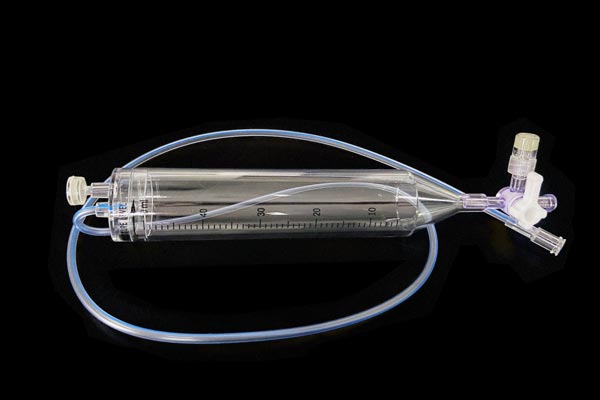
Infusion drips, as an important part of medical consumables, have their injection molding quality directly related to the safety and effectiveness of medical operations. During the injection molding process of infusion drips, due to various factors such as material characteristics, mold design, and process parameter control, some common problems often occur. This article will delve into these issues and propose corresponding solutions.
I. Common Problems
1. Flash (Burrs)
Phenomenon description: Excess thin sheets or burr-like plastic appear at the edges, parting surfaces, or the joints of moving parts of the infusion drip. Flash not only affects the appearance of the product but may also scratch the user's skin, tear the packaging, and even generate plastic debris during medical operations, posing a medical safety risk.
Causes:
-
Mold aspects: Insufficient clamping accuracy or wear and damage to the mold parting surface lead to insufficient clamping force, causing the plastic melt to overflow from the gaps.
-
Process parameters: Excessively high injection pressure, fast injection speed, or high holding pressure cause the plastic melt to overflow from the mold gaps under high pressure.
2. Sink Marks
Phenomenon description: Local depressions appear on the surface of the infusion drip, usually more obvious in areas with large wall thickness variations, on the back of ribs or bosses. Sink marks affect the transparency of the product and the observation of liquid flow, reducing the product's strength.
Causes:
-
Cooling shrinkage: During the cooling process, the plastic shrinks in volume. The thick-walled part shrinks more in volume than the thin-walled part, causing the thin-walled part to be pulled inward, resulting in sink marks.
-
Insufficient holding pressure: Insufficient holding pressure or a short holding time during the holding stage fail to effectively replenish the volume of plastic that shrinks due to cooling.
3. Weld Lines
Phenomenon description: Obvious linear marks appear on the surface of the infusion drip, which are formed when the flow fronts of two or more streams of plastic melt do not fully fuse when they meet. Weld lines not only affect the aesthetics of the product but may also become potential sites for bacterial growth, affecting medical safety.
Causes:
-
Unreasonable gate design: The gate position, number, or shape do not allow the plastic melt to fill the cavity uniformly, leading to the formation of weld lines.
-
Improper temperature and speed control: Low injection temperature or slow injection speed result in poor fluidity of the plastic melt, making the weld lines more pronounced.
4. Flow Marks
Phenomenon description: Wave-like or striped marks similar to liquid flow appear on the surface of the infusion drip. Flow marks affect the transparency and appearance quality of the product, interfering with the observation of internal liquids or substances by medical staff.
Causes:
-
Low material and mold temperatures: Low material and mold temperatures reduce the fluidity of the plastic melt, resulting in flow marks during cavity filling.
-
Improper injection speed: An excessively fast or slow injection speed causes uneven flow of the plastic melt in the cavity, leading to flow marks.
5. Dimensional Deviations
Phenomenon description: The actual dimensions of the infusion drip are inconsistent with the designed dimensions, which may be larger or smaller. Dimensional deviations can lead to assembly difficulties or functional failures, affecting the normal progress of medical operations.
Causes:
-
Insufficient mold manufacturing accuracy: Inaccurate dimensions of the mold cavity or core result in dimensional deviations in the injection-molded parts.
-
Improper control of process parameters: Inappropriate control of injection pressure, holding time, and cooling time affects dimensional accuracy.
II. Solutions
1. Solutions for Flash (Burrs)
-
Mold maintenance: Regularly inspect and maintain the mold to ensure clamping accuracy and the integrity of the parting surface. Promptly repair or replace worn or damaged mold components.
-
Process parameter adjustment: Appropriately reduce the injection pressure and injection speed to prevent the plastic melt from overflowing from the mold gaps under high pressure. At the same time, optimize the holding pressure and time to ensure sufficient filling and compaction of the plastic melt in the cavity.
2. Solutions for Sink Marks
-
Optimize mold design: Increase wall thickness uniformity and reduce the thickness difference on the back of ribs or bosses to reduce the risk of sink marks.
-
Process parameter adjustment: Increase the holding pressure and holding time to ensure sufficient replenishment of the plastic melt during cooling. At the same time, optimize the cooling system design to ensure uniform cooling of all parts of the product.
3. Solutions for Weld Lines
-
Optimize gate design: According to the product shape and size requirements, reasonably design the gate position, number, and shape to ensure uniform filling of the cavity by the plastic melt.
-
Process parameter adjustment: Increase the injection temperature and injection speed to enhance the fluidity of the plastic melt, making the weld lines less obvious. At the same time, optimize the mold venting system to ensure the smooth discharge of residual air and volatile components in the cavity.
4. Solutions for Flow Marks
-
Increase material and mold temperatures: Appropriately increase the material and mold temperatures to enhance the fluidity of the plastic melt and reduce the occurrence of flow marks.
-
Optimize injection speed: According to the product shape and size requirements, reasonably adjust the injection speed to ensure uniform flow of the plastic melt in the cavity.
5. Solutions for Dimensional Deviations
-
Improve mold manufacturing accuracy: Use high-precision mold processing equipment and techniques to ensure that the dimensional accuracy of the mold cavity and core meets the design requirements.
-
Process parameter optimization: Determine the optimal combination of injection molding process parameters through experiments and simulation analysis. Use an advanced injection molding machine control system to monitor and adjust the process parameters in real time to ensure their stability throughout the injection molding process.






 Home
Home