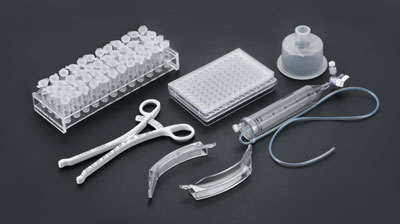
Medical injection molding, as the core process in the manufacturing of modern medical equipment, produces billions of critical components such as syringes, catheters, and implants every year. However, the annual global waste of about 16 billion plastic syringes and 15 billion masks, along with the widespread penetration of medical plastics in oceans, soil, and even human tissues, reveals the severe environmental challenges faced by this industry. This article explores the green transformation paths of medical injection molding from three aspects: material innovation, process upgrading, and circular economy.
I. Environmental Dilemmas of Traditional Medical Injection Molding
1. Long-term Pollution from Non-degradable Materials
Traditional medical injection molding mainly uses petroleum-based plastics like polypropylene (PP) and polycarbonate (PC), which take hundreds of years to degrade in the natural environment. For example, a medical center in the Netherlands generates 34 tons of medical plastic waste annually, with 36% being plastic materials. These wastes enter the food chain in the form of microplastics and have been detected in human placentas, blood, and fetal tissues.
2. High Carbon Emissions in Production and Disposal
The production, transportation, and incineration of medical plastics release a large amount of carbon dioxide. Taking disposable syringes as an example, the production stage accounts for more than 60% of their full life-cycle carbon emissions, while incineration treatment further releases toxic substances like dioxins.
3. Resource Waste and Economic Burden
The traditional injection molding process has a scrap rate of 15%-20%, and the design of disposable medical products leads to low resource utilization. For instance, before optimizing its centralized material supply system, an auto parts factory consumed 1.2 million kWh of electricity annually, with 30% of the energy wasted on raw material preheating and equipment idling.
II. Material Innovation: Reducing Environmental Footprints from the Source
1. Breakthroughs in Biobased Degradable Materials
-
Polylactic Acid (PLA): Used in absorbable sutures and surgical materials, its mechanical strength can be improved through copolymerization (e.g., PLA/PCL), and its degradation products can be converted into bioethanol.
-
Polyhydroxyalkanoates (PHA): Completely degradable in marine environments within 15 days and heat-resistant (melting point > 300°C), it is produced industrially through genetically engineered bacteria. Although its cost is 5-8 times higher than that of traditional PE, EU carbon tariff policies are expected to narrow this cost gap by 2027.
-
Starch-based Materials (TPS): Low-cost and biodegradable, but plasticizers need to be added to improve water resistance. Currently mainly used in non-sterile packaging.
2. Optimization of High-performance Engineering Plastics
-
Polyphenylene Ether (PPO): Heat-resistant (>200°C) and chemically resistant, suitable for high-temperature sterilized instrument housings. However, its high processing temperature and cost need to be overcome through modification technologies.
-
Liquid Silicone Rubber (LSR): Used to make soft seals and catheters, safe for human contact and capable of reducing production energy consumption through heat recovery devices.
III. Process Upgrading: Practical Paths for Green Manufacturing
1. Precision Injection Molding and Zero-waste Production
-
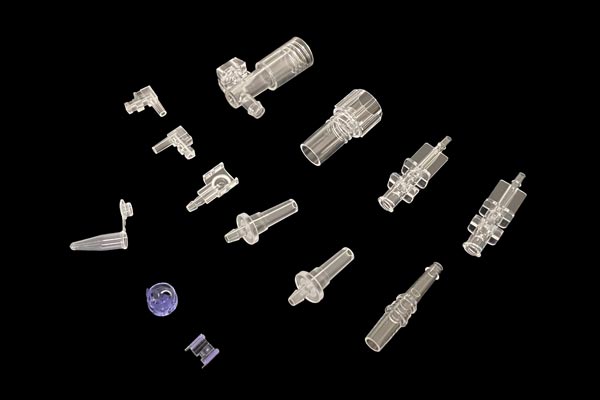
Micro-injection Molding: Produces precision components such as hearing aids and microfluidic chips, with material utilization rates exceeding 98%.
-
Thin-wall Injection Molding: Manufactures needle bases and catheter housings with wall thicknesses < 1mm, reducing material usage by 30% while maintaining strength.
-
Gas-assisted Injection Molding: Injecting inert gas into the mold cavity to form hollow channels, reducing material usage and shortening cooling time.
2. Clean Production and Energy Management
-
Fully Enclosed Injection Systems: Such as the fully enclosed design of Ningbo Lison injection molding machines, with dust residue rates as low as 0.01%, meeting Class 100,000 cleanliness requirements and reducing bacterial attachment risks.
-
Closed-loop Constant Pressure Water Supply and Frequency Conversion Energy Saving: The closed-loop constant pressure water supply technology of Kunshan Senchi ensures a cooling water pressure fluctuation of ≤ ±0.1 MPa, with a comprehensive energy-saving rate exceeding 30%.
-
Centralized Material Supply Intelligent Control: Through barcode weighing and batch management, the defect rate of raw materials is reduced to below 0.3%, minimizing waste caused by raw material deterioration.
IV. Circular Economy: Building a Closed-loop Recycling System
1. Intelligent Sorting and Material Regeneration
-
Near-infrared Spectroscopy (NIR) + X-ray Fluorescence (XRF) Composite Detection: Achieves over 97% plastic type identification accuracy. Pilot projects in Europe have increased the recycling rate of medical plastics from less than 20% to 65%.
-
Enzyme-catalyzed Degradation Technology: Directed evolution-developed PHB depolymerase enzyme preparations achieve an 85% degradation efficiency, converting PHA into 3-hydroxybutyric acid (3HB) for the production of new medical catheters.
-
Waste Mask Regeneration: After enzymatic hydrolysis, the extracted polylactic acid monomers can be regenerated at a rate of up to 90% and reused in the production of non-sterile packaging materials.
2. Policy and Industrial Collaboration
-
"Plastic Passport" System: Records full life-cycle data of products, including material composition, sterilization methods, and degradation performance, providing a basis for recycling.
-
Regional Circular Economy Parks: Such as the Dutch BioCycle project, which integrates the "raw material-production-recycling" links and processes 50,000 tons annually in a single park.
-
Carbon Credit Incentive Mechanism: Hospitals can offset 30% of their disposal costs through carbon credits obtained from plastic recycling, encouraging medical institutions to participate in the recycling system.
V. Future Outlook: Global Actions for Green Healthcare
It is expected that by 2030, through optimization of the entire industry chain, the comprehensive cost of bioplastics in the medical field can be reduced to 1.2-1.5 times that of traditional materials, while reducing microplastic pollution by 75%. Achieving this goal requires the joint efforts of policymakers, material scientists, medical institutions, and recycling enterprises:
-
Technological Breakthroughs: Develop broad-spectrum enzyme preparations (capable of degrading PLA, PHA, and PS simultaneously) and plasma-assisted degradation technologies (with a 3-fold increase in processing efficiency).
-
Standard Improvement: Establish a certification system for medical-grade bioplastics, covering tests on degradation after sterilization and restrictions on heavy metal content.
-
Consumer Education: Promote the use of reusable medical devices (such as PPO instrument housings resistant to high-temperature sterilization) to reduce reliance on disposable products.
The green transformation of medical injection molding is not only a technological innovation but also a systemic revolution involving material science, industrial design, policies and regulations, and consumer habits. From laboratory breakthroughs in biobased materials to the large-scale operation of circular economy parks, and from the intelligent upgrading of precision injection molding machines to the formulation of global recycling standards, every step of progress is seeking a balance between human health and planetary sustainability.





 Home
Home