Medical injection-molded products, due to their direct application in human bodies or medical settings, demand extremely high dimensional accuracy. From precision components of surgical instruments to microstructures of implantable medical devices, any dimensional deviation can lead to functional failure, assembly difficulties, or even medical accidents. However, in actual production, the issue of low dimensional accuracy is common, becoming a critical bottleneck restricting the high-quality development of the medical injection molding industry. This article systematically explores how to improve the dimensional accuracy of medical injection-molded products from the perspectives of cause analysis, technical optimization, and management strategies.
1. Root Causes of Low Dimensional Accuracy: A Complex Problem of Multi-Factor Coupling
The insufficient dimensional accuracy of medical injection-molded products is typically caused by multiple factors working together, requiring a comprehensive analysis from the dimensions of materials, molds, processes, and equipment:
-
Material Property Fluctuations
Medical-grade plastics (such as PPSU, PEEK, and LCP) have direct impacts on molding dimensions through their flowability, shrinkage rate, and thermal stability. If there are significant performance differences between material batches or if process parameters are not adjusted according to material characteristics, uneven product shrinkage and dimensional deviations can easily occur.
-
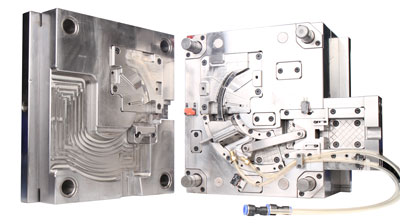
Mold Design Defects
-
Improper Gate Positioning: Leads to uneven melt filling and localized stress concentration, causing deformation.
-
Inadequate Cooling System: Uneven mold temperature distribution results in significant differences in shrinkage rates across different product regions.
-
Mold Wear: Long-term use causes cavity surface wear, expanding dimensional tolerances.
-
Uncontrolled Process Parameters
-
Injection Speed and Pressure: Excessive speed creates turbulence, while insufficient pressure results in incomplete filling, both affecting dimensional stability.
-
Packing Time and Pressure: Insufficient packing leads to inadequate shrinkage compensation, while excessive packing may cause flash or internal stress.
-
Mold Temperature: Fluctuations exceeding ±2°C significantly affect shrinkage rates, leading to dimensional drift.
-
Insufficient Equipment Precision
Unstable clamping force, low-precision temperature control systems, or worn mechanical structures in injection molding machines can indirectly cause product dimensional fluctuations.
2. Technical Optimization: Full-Process Control from Source to End
Improving dimensional accuracy requires technical support, building an optimization system that covers the entire process from design to production and inspection:
-
Material Selection and Preprocessing
-
Prioritize medical-grade specialty materials with low shrinkage rates and high thermal stability, such as high-rigidity PPSU or low-shrinkage PEEK.
-
Implement strict material drying processes (e.g., drying at 120°C for 4 hours) to avoid dimensional fluctuations caused by moisture.
-
Test material thermal properties via DSC (Differential Scanning Calorimetry) to provide a basis for setting process parameters.
-
Mold Design and Manufacturing Upgrades
-
Moldflow Analysis: Optimize gate positioning, runner design, and cooling systems through simulation to reduce uneven filling and internal stress.
-
High-Precision Machining: Use CNC five-axis machining and EDM (Electrical Discharge Machining) to ensure cavity dimensional tolerances within ±0.005mm.
-
Surface Treatment: Apply hard chrome plating or nitriding to cavity surfaces to enhance wear resistance and extend mold life.
-
Precise Adjustment of Process Parameters
-
Multi-Stage Injection and Packing: Adopt slow-fast-slow multi-stage injection speeds to reduce turbulence at the melt front; use staged pressure reduction during packing to avoid over-compression.
-
Dynamic Mold Temperature Control: Maintain mold temperature fluctuations within ±1°C using oil temperature controllers or steam heating systems.
-
Scientific Mold Trials: Use DOE (Design of Experiments) methods to determine the optimal process window (e.g., injection speed, packing pressure, cooling time).
-
Equipment Upgrades and Maintenance
-
Choose all-electric injection molding machines, whose closed-loop control precision is over 30% higher than hydraulic machines, meeting medical high-precision demands.
-
Regularly calibrate equipment sensors (e.g., temperature sensors, pressure sensors) to ensure data accuracy.
-
Implement preventive maintenance plans to reduce mechanical wear’s impact on clamping force and repeat positioning accuracy.
3. Management Strategies: Building a "Firewall" for Quality Assurance
Technical optimization must be combined with scientific management to form a sustained quality improvement loop:
-
Standardized Operating Procedures (SOPs)
Develop full-process SOPs covering material inspection, mold debugging, and production monitoring, defining critical parameter control ranges (e.g., mold temperature, packing time) to reduce human operational errors.
-
Real-Time Quality Monitoring and Feedback
-
Deploy online inspection systems (e.g., laser scanners) to monitor key product dimensions in real time, with data automatically uploaded to MES systems.
-
Establish SPC (Statistical Process Control) charts to analyze dimensional data, promptly detect trending deviations, and adjust processes.
-
Personnel Training and Skill Certification
Regularly train operators in injection molding processes, mold maintenance, and quality control, ensuring skill compliance through theoretical exams and practical assessments.
-
Supply Chain Collaborative Management
-
Sign quality agreements with material suppliers, requiring batch inspection reports to ensure material performance stability.
-
Implement tiered management for mold suppliers, prioritizing partners certified under ISO 13485.
4. Case Study: Precision Improvement of a Medical Catheter Connector
A company’s catheter connectors suffered from dimensional deviations causing assembly difficulties. The following measures achieved precision improvements:
-
Material Optimization: Switched to low-shrinkage PEEK, reducing shrinkage from 1.2% to 0.8%.
-
Mold Improvement: Used Moldflow analysis to optimize gate positioning and added conformal cooling channels, improving mold temperature uniformity by 40%.
-
Process Adjustment: Increased packing pressure from 80MPa to 100MPa and extended packing time from 5s to 8s, enhancing dimensional stability by 25%.
-
Equipment Upgrade: Introduced an all-electric injection molding machine, improving repeat positioning accuracy from ±0.05mm to ±0.02mm.
Ultimately, product dimensional tolerances narrowed from ±0.1mm to ±0.03mm, with the pass rate increasing from 85% to 99.2%.
Conclusion: Precision Improvement is a Systematic Project Requiring Long-Term Effort
Enhancing the dimensional accuracy of medical injection-molded products is a systematic project involving materials, molds, processes, equipment, and management. Enterprises must build a full-process quality control system from design to production through continuous optimization and iteration. Only in this way can they gain a competitive edge in the market and provide safer, more reliable high-precision injection-molded products for the medical industry.






 Home
Home