Introduction
In the medical injection molding industry, the accuracy and quality of products are directly related to the health and safety of patients. However, the common problem of sticking to the mold during the injection molding process not only affects production efficiency but may also lead to product defects, increasing the scrap rate and posing challenges to cost control and brand image for medical enterprises. Sticking to the mold refers to the phenomenon where the plastic melt, after cooling and solidifying in the mold cavity, partially or completely adheres to the mold surface and is difficult to demold. This issue is particularly prominent in high-precision, complex-structured medical-grade injection-molded parts. This article will systematically explore strategies to solve the problem of medical injection-molded parts sticking to the mold from the aspects of material selection, mold design, process parameter adjustment, and post-processing.
1. Material Selection and Pre-treatment
-
Select low-adhesion materials: Give priority to medical-grade plastics with good demolding properties, such as certain modified polypropylene (PP), polyethylene (PE), or materials reinforced with special additives. These materials have lower adhesion to the mold surface after cooling and are easier to demold.
-
Material drying treatment: Ensure that the raw materials are fully dried to avoid degradation or bubbles caused by moisture, which can exacerbate the sticking-to-the-mold phenomenon. Preheat and dry the materials appropriately according to their characteristics before use.
2. Mold Design and Optimization
-
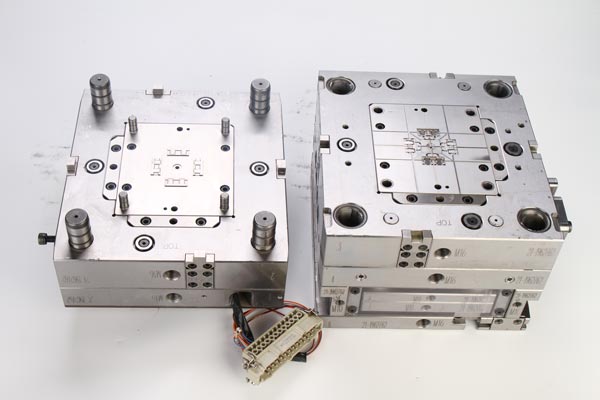
Surface treatment: Polish, chrome-plate, or apply special coatings (such as PVD coatings) to the surface of the mold cavity to reduce the friction coefficient and improve surface smoothness, thereby reducing the risk of sticking to the mold.
-
Rational design of the gate and venting system: Optimize the position and size of the gate to ensure uniform filling of the melt and reduce residual stress. At the same time, design an effective venting system to avoid gas entrapment, which can cause scorching or sticking to the mold.
-
Demolding slope and ejection mechanism: Increase an appropriate demolding slope to facilitate the natural release of the product. Design a reasonable ejection mechanism to ensure that the ejection force is evenly distributed and avoid local stress concentration, which can lead to sticking to the mold or deformation.
3. Process Parameter Adjustment
-
Temperature control: Precisely control the mold temperature and melt temperature. Excessive mold temperature can exacerbate sticking to the mold, while too low a temperature may lead to increased internal stress in the product. Determine the optimal temperature range through experiments and maintain stable production.
-
Injection speed and pressure: Adjust the injection speed and pressure to avoid shear heating of the melt due to overly fast injection or insufficient filling due to overly slow injection. Reasonable injection parameters help reduce internal stress in the product and lower the tendency to stick to the mold.
-
Packing pressure and cooling time: Extend the packing pressure time appropriately to ensure full filling of the product, but avoid over-packing due to excessive time. The cooling time should be precisely set according to the product thickness and material characteristics to ensure that the product is fully solidified before demolding.
4. Post-processing and Maintenance
-
Use of demolding agents: When necessary, select non-toxic, residue-free demolding agents suitable for the medical industry and evenly spray them on the mold surface to reduce sticking to the mold. However, it should be noted that long-term reliance on demolding agents may mask deeper-seated problems, and other solutions should be优先考虑 (given priority to).
-
Regular mold maintenance: Regularly clean the mold to remove residues and deposits and keep the mold surface clean. Check and replace worn parts, such as ejector pins and slides, to ensure that the mold is always in optimal working condition.
-
Continuous monitoring and data analysis: Establish a production process monitoring system, collect and analyze data on the occurrence of sticking to the mold, identify potential problem points, and continuously optimize the production process and parameter settings.
Conclusion
Solving the problem of medical injection-molded parts sticking to the mold is a systematic project that requires comprehensive consideration from material selection, mold design, process parameter adjustment to post-processing maintenance. Through continuous technological innovation and practical exploration, combined with advanced production management and quality control methods, the risk of sticking to the mold can be effectively reduced, and the production efficiency and product quality of medical injection-molded parts can be improved, contributing to the medical and health cause.






 Home
Home