In the field of medical product manufacturing, injection molding technology has become a core process for producing complex medical devices due to its high precision, efficiency, and ability to enable mass production. By precisely controlling parameters such as temperature, pressure, and speed, molten plastic is injected into molds and cooled to form products, directly influencing their mechanical properties, chemical stability, and biocompatibility. This article explores how injection molding technology affects the physical and chemical properties of medical products from four dimensions: material selection, process parameter adjustment, mold design optimization, and post-processing techniques.
1. Material Selection: Laying the Foundation for Performance
Medical products demand materials with strict biocompatibility, corrosion resistance, and mechanical strength. Injection molding requires selecting appropriate materials based on product functionality:
-
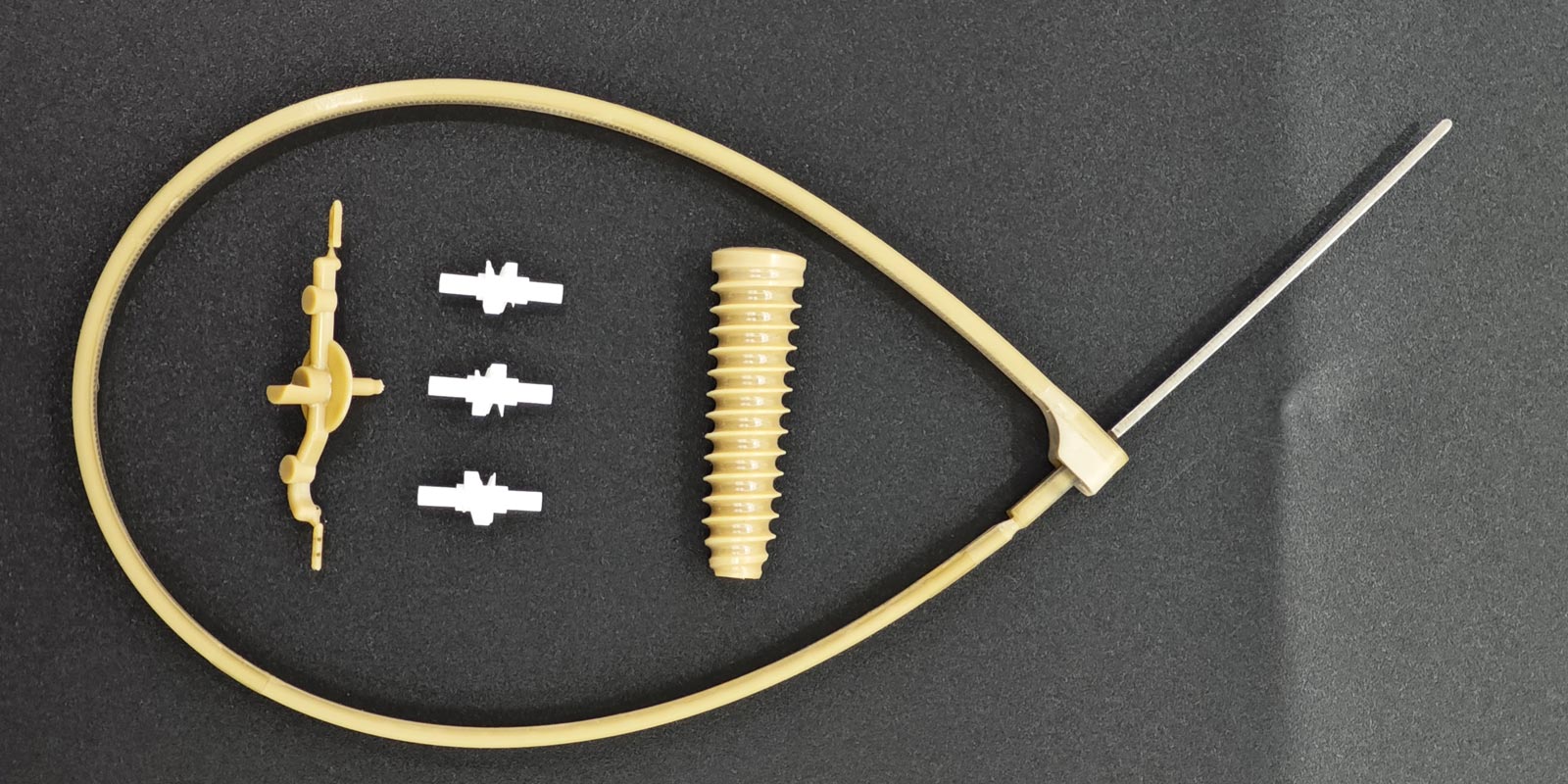
High-performance engineering plastics: Polyether ether ketone (PEEK) is widely used in orthopedic implants and surgical instruments due to its high-temperature resistance, chemical corrosion resistance, and strength. Precision injection molding achieves micron-level dimensional accuracy, ensuring long-term compatibility with human tissues.
-
Biodegradable materials: Poly(p-dioxanone) (PDO) is processed via injection molding to manufacture absorbable sutures and stents. Its degradation rate and mechanical properties must be precisely controlled through process parameters to avoid molecular chain breakage caused by thermal stress, which could affect degradation cycles.
-
Special composite materials: Nano-molding technology (NMT) combines metal and plastic at the nanoscale, achieving lightweight and high-strength integration, commonly used in high-end medical device housings. The interfacial bonding strength directly impacts the product’s impact resistance.
2. Process Parameter Adjustment: Precisely Shaping Performance
Parameters such as temperature, pressure, and speed during injection molding directly influence the crystallinity, molecular orientation, and internal stress distribution of products, thereby determining their physical and chemical properties:
-
Temperature control:
-
Melt temperature: Excessive heat can degrade materials (e.g., PDO molecular weight reduction at high temperatures, producing toxic byproducts), while insufficient heat causes poor plasticization and surface defects. For instance, PFA requires temperatures above 260°C to maintain thermal stability.
-
Mold temperature: Affects crystallinity and shrinkage. High mold temperatures enhance PEEK’s crystallinity and wear resistance, while low temperatures suit amorphous materials (e.g., PC) to reduce warping.
-
Pressure and speed:
-
Injection pressure: Insufficient pressure leads to short shots, while excessive pressure causes flash or internal stress concentration. Orthopedic implants require high pressure for dense filling to avoid micro-pores that could trigger fatigue fractures.
-
Packing pressure: Optimizes shrinkage compensation, reducing sink marks. For precision catheters, inadequate packing results in uneven wall thickness, affecting fluid transmission efficiency.
-
Cooling time: Cooling rate influences crystal structure. Rapid cooling refines grain size, improving transparency (e.g., optical medical devices), while slow cooling suits parts requiring high toughness.
3. Mold Design Optimization: Ensuring Performance Consistency
Mold design, including runner systems, venting, and surface treatment, directly impacts dimensional accuracy and surface quality:
-
Runner balance: Multi-cavity molds require hot runner technology (e.g., SVG sequential valve gates) to balance melt flow, avoiding weld lines or incomplete filling. This approach has been adapted from automotive bumper molding to large medical panels.
-
Venting design: Poor venting traps gases, causing air pockets or burn marks, reducing corrosion resistance. Medical-grade molds employ vacuum or micro-porous venting structures.
-
Surface roughness: Mold surface finish affects tissue contact performance. For example, artificial joint surfaces must have Ra < 0.1 μm to minimize wear particle release.
4. Post-Processing Techniques: Enhancing Performance Stability
Post-molding processes like annealing and surface treatment eliminate residual stress and improve performance:
-
Annealing: Reduces internal stress in PEEK implants, enhancing dimensional stability. Spinal fusion cages, for instance, require annealing at 180°C for 4 hours to prevent postoperative deformation.
-
Surface modification: Plasma spraying or chemical etching creates micro-nano structures on surfaces, improving cell adhesion (e.g., tissue engineering scaffolds). For implants, coatings reduce metal ion release risks.
-
Sterilization compatibility: Materials must withstand gamma irradiation or ethylene oxide sterilization. PFA retains mechanical properties after high-temperature sterilization, making it suitable for reusable instruments.
Case Study: Optimizing PDO Suture Molding
Poly(p-dioxanone) (PDO) sutures require balancing degradation rate and mechanical strength:
-
Material challenge: PDO is heat-sensitive; high temperatures cause degradation, while low temperatures reduce crystallinity and strength.
-
Process solutions:
-
Two-stage temperature control: Melt temperature at 220–230°C and mold temperature at 80–90°C promote ordered crystallization.
-
Optimized injection speed: High-speed filling (>500 mm/s) minimizes thermal history variations, avoiding local overheating.
-
Annealing: Low-temperature annealing below the glass transition temperature (Tg ≈ 10°C) eliminates residual stress, extending degradation cycles.
Conclusion
Injection molding technology enables precise control over the physical and chemical properties of medical products through material selection, process parameter adjustment, mold design, and post-processing. Future advancements, such as the integration of digital twins and AI, will enable real-time adaptive parameter adjustments, further improving the molding quality of complex medical components (e.g., cardiac stents, neurocatheters) and clinical safety. The field is evolving toward high precision, high performance, and sustainability, providing critical manufacturing support for precision medicine.






 Home
Home