Introduction
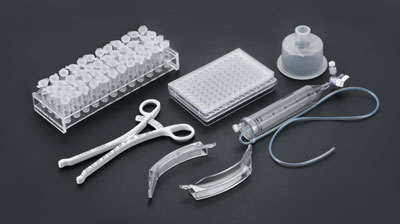
The medical industry demands extreme precision, safety, and cost sensitivity for its products. Injection molding technology, with its advantages of high precision, efficiency, and scalability, has become the core process for manufacturing medical injection-molded components. From disposable consumables to implantable devices, injection molding not only meets the industry's needs for complex structures but also significantly reduces production costs through process optimization and material innovation. This article analyzes the cost-benefit logic of injection molding technology in the medical field from three dimensions: cost composition, benefit enhancement pathways, and typical case studies.
I. Cost Composition and Core Challenges of Medical Injection-Molded Components
The costs of medical injection-molded components can be divided into fixed costs and variable costs:
-
Fixed Costs: Mold development, equipment depreciation, and cleanroom construction are the primary expenses. For example, developing a set of high-precision medical molds can cost hundreds of thousands of yuan, while the construction cost per square meter of a cleanroom (Class 10,000 or Class 100) is 3-5 times that of an ordinary workshop.
-
Variable Costs: Raw materials, energy consumption, labor, and scrap rates are key variables. Medical-grade plastics (e.g., PEEK, medical-grade PC) are 2-3 times more expensive than ordinary engineering plastics, while every 1% reduction in the scrap rate during injection molding saves 1%-2% in material and labor costs.
Core Challenges: The medical industry's stringent requirements for biocompatibility, sterilization resistance, and dimensional accuracy pose challenges for traditional injection molding processes, including high material costs, difficulty in controlling process parameters, and volatile yield rates. For example, extending the molding cycle by 1 second for thin-walled medical components (e.g., infusion set needle hubs) reduces annual production capacity by tens of thousands of pieces per machine, directly increasing unit costs.
II. Four Pathways for Injection Molding Technology to Enhance Cost-Benefit
1. Mold System Optimization: Reducing Long-Term Costs from the Design Stage
-
Structural Upgrades: Optimize runner design through CAE simulation to reduce weld lines and shrinkage defects. For example, using hot runner molds reduces cold runner sprue waste from 15% to below 5% while shortening molding cycles by 10%-15%.
-
Material Innovation: Select pre-hardened steel (e.g., P20+Ni) or high-speed steel (e.g., SKH-9) for mold making, combined with AlTiN coating, to extend mold life from 500,000 cycles to over 1 million cycles, halving the mold cost per unit.
-
Precise Temperature Control: Zoned mold temperature controllers (±1°C accuracy) resolve warping caused by wall thickness variations, improving yield rates by 8%-12% and reducing rework costs.
Case Study: A company reduced the scrap rate of blood dialyzer end caps from 3% to 0.8% by optimizing mold gate positions, saving over 2 million yuan in material costs annually.
2. Material Science and Formulation Optimization: Balancing Performance and Cost
-
Modified Material Substitution: Reduce resin usage through glass fiber reinforcement or inorganic fillers (e.g., talc). For example, 30% glass fiber-reinforced PP for manufacturing appliance housings reduces material costs by 18% while meeting strength requirements; in medical applications, glass fiber-reinforced PA66 is used for surgical instrument handles, combining rigidity and lightweight design.
-
Recycling Material Grading: Establish a "raw material-primary recycled material-secondary recycled material" system, using 20%-30% secondary recycled material for components with low appearance requirements (e.g., internal brackets), reducing material costs by 10%-15%. Double-screw extruders ensure melt quality and avoid defects caused by impurities.
-
Bio-Based Material Applications: For eco-friendly requirements (e.g., disposable medical packaging), use PLA or PBAT biodegradable materials. Although initial costs are slightly higher, they avoid environmental compliance risks and enhance brand competitiveness long-term.
Case Study: An infusion set manufacturer saved 1.2 million yuan annually by using 25% recycled material in non-critical components, while obtaining ISO 13485 certification to expand into the EU market.
3. Process Parameter Lean Management: Shortening Cycles and Improving Yield Rates
-
Dynamic Packing Technology: Use servo hydraulic systems with cavity pressure sensor feedback to adjust packing pressure in real time, resolving shrinkage issues in thick-walled medical components (e.g., pacemaker housings) and improving material utilization by 5%-8%.
-
Energy Consumption Management: Retrofit injection molding machines with "servo motors + variable frequency pumps" and adopt "sleep-wake" energy-saving modes to reduce energy consumption by 20%-30%. For example, a single machine saves over 50,000 yuan in electricity annually in multi-variety, small-batch production scenarios.
-
Expanded Molding Window: Use orthogonal experiments to determine optimal combinations of "pressure-temperature-time" variables. A company reduced molding cycles from 40 seconds to 35 seconds by optimizing injection pressure (95 MPa) and packing time (8 seconds), improving production efficiency by 22%.
Case Study: A company reduced the scrap rate of neural electrode injection-molded components from 2.5% to 0.5% through process parameter optimization, saving 700,000 yuan in scrap losses annually.
4. Automation and Intelligence: Reducing Labor and Inspection Costs
-
Intelligent Part Removal and Inspection: Deploy six-axis robots (±0.05 mm repeatability) with vision inspection systems for fully automated "part removal-inspection-sorting." Labor costs are reduced by 60%, while inspection miss rates drop from 3% to 0.5%.
-
MES System Empowerment: Collect production data (e.g., molding cycles, scrap rates, energy consumption) to build correlation models between process parameters and costs, enabling "anomaly alert-parameter self-optimization" closed-loop management. A company improved production efficiency by 10%-15% and overall equipment effectiveness (OEE) to over 85% after implementation.
-
Digital Twin Applications: Simulate molds and process parameters in virtual environments to validate design feasibility in advance, reducing trial mold attempts from 5-8 to 2-3 and shortening mold development cycles by 30%-40%.
Case Study: A company saved 900,000 yuan in annual labor costs and shortened product delivery cycles by 5 days through vision inspection + robot sorting systems.
III. Cost-Benefit Practices for Typical Medical Injection-Molded Components
1. Disposable Consumables: Central Venous Catheters
-
Cost Optimization: Use insert molding to integrate metal catheter hubs with plastic tubing in one step, reducing assembly steps and cutting labor costs by 40%; optimize runner design to shorten molding cycles from 25 seconds to 20 seconds, increasing daily production capacity per machine by 20%.
-
Benefit Enhancement: Annual production capacity rises from 5 million to 6 million pieces, with unit costs dropping from 0.8 yuan to 0.65 yuan, saving 750,000 yuan annually.
2. Implantable Devices: Pacemaker Housings
-
Cost Optimization: Select PEEK material (high-temperature resistance, biocompatibility) and use mold temperature controllers (220°C ±1°C) to resolve warping, improving yield rates from 85% to 92%; adopt hot runner molds to reduce waste and improve material utilization from 78% to 85%.
-
Benefit Enhancement: Unit costs drop from 120 yuan to 105 yuan, saving 1.5 million yuan annually, while obtaining FDA certification to expand into the U.S. market.
3. Diagnostic Equipment: Ultrasound Probe Connectors
-
Cost Optimization: Use medical-grade nylon (PA) with stainless steel inserts for insert molding, applying dynamic packing technology to ensure seal integrity between connectors and probes, reducing scrap rates from 5% to 1.5%; automate assembly lines to cut labor costs by 50%.
-
Benefit Enhancement: Annual production capacity rises from 200,000 to 300,000 pieces, with unit costs dropping from 45 yuan to 38 yuan, saving 2.1 million yuan annually.
IV. Future Trends and Recommendations
-
Green Injection Molding: Broader adoption of bio-based and biodegradable materials, with lightweight molds (e.g., carbon fiber composite molds) further reducing energy consumption.
-
Intelligent Manufacturing: Combining digital twins with AI algorithms for "self-sensing-self-decision-self-optimization" of process parameters, advancing toward "lights-out factories."
-
Modular Production: Develop quick mold-changing systems (reducing mold change times from 2 hours to 15 minutes) to meet customization demands for multi-variety, small-batch production.
Recommendations for Enterprises:
-
Phased Implementation: Prioritize high-cost areas (e.g., scrap rates, material costs) for quick returns before expanding automation.
-
Data-Driven Decisions: Build digital correlation models between process parameters and costs to avoid "experience-based" improvements.
-
Ecosystem Collaboration: Partner with material suppliers and mold manufacturers for joint R&D and shared improvement benefits.
Conclusion
Injection molding technology is reshaping the cost structure of medical injection-molded components through mold optimization, material innovation, process refinement, and automation upgrades. In the dual context of cost reduction and high-quality development in the medical industry, injection molding technology serves not only as a manufacturing tool but also as a core engine for medical enterprises to build cost barriers and enhance market competitiveness. In the future, the integration of green materials and intelligent technologies will unlock even greater cost-benefit potential in the medical field.





 Home
Home