




In the field of medical injection molding, the efficiency of mold cooling and precise control of injection molding parameters directly determine product dimensional accuracy, surface quality, and production efficiency. Given the stringent requirements of medical products for biocompatibility, mechanical properties, and molding stability, this article systematically explores optimization strategies from three dimensions: mold cooling system design, injection molding process parameter optimization, and intelligent control.
1.1 Conformal Cooling Channels
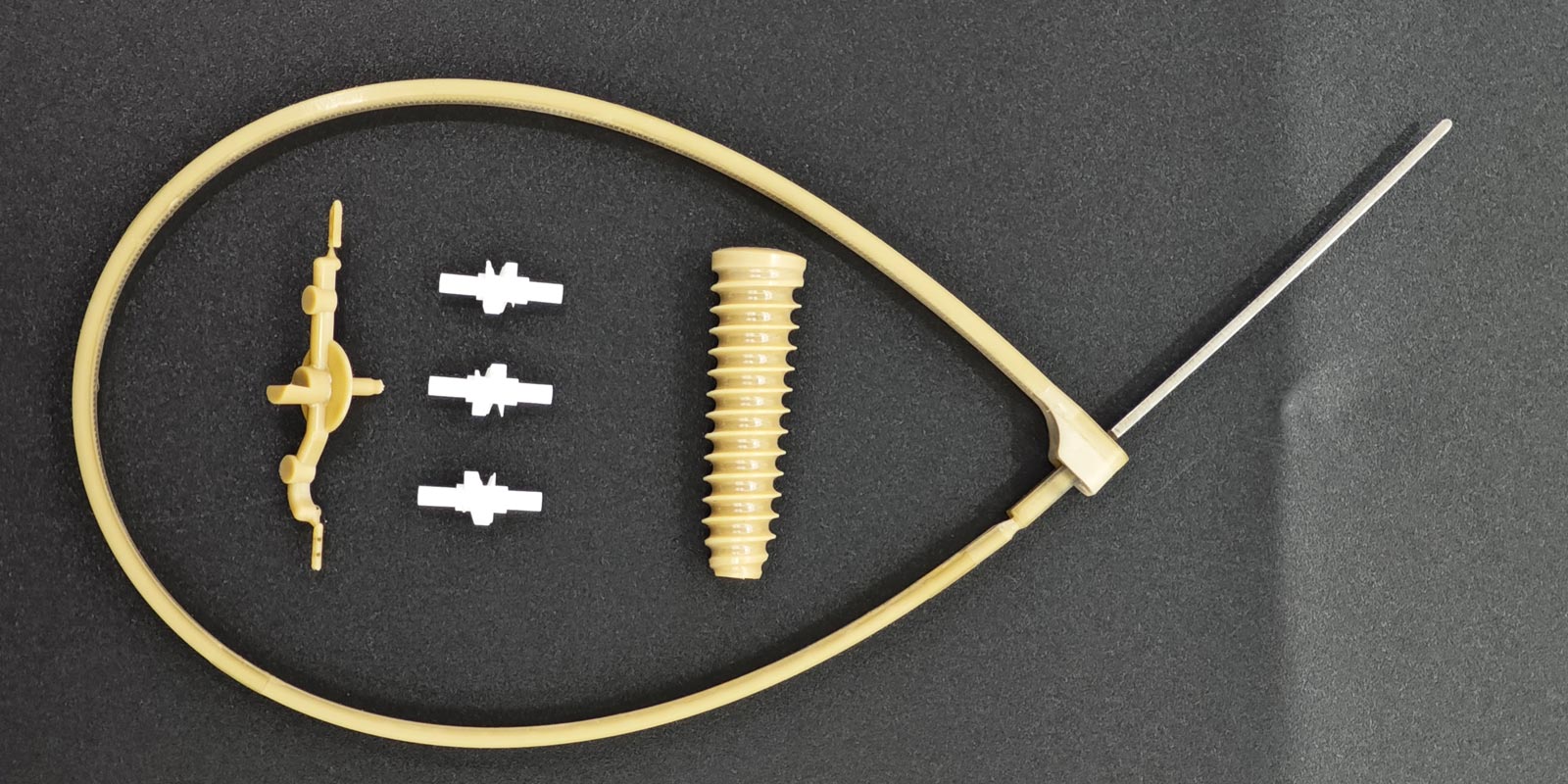
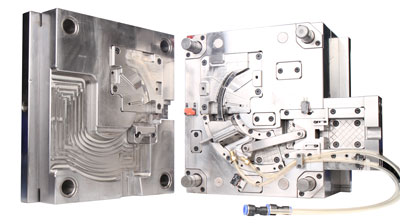
Traditional linear cooling channels often create cooling blind spots on complex curved surfaces, leading to localized thermal stress concentration. Conformal cooling channels manufactured via 3D printing can closely conform to mold cavity contours, ensuring uniform cooling medium coverage. For example, in orthopedic implant molds, conformal channels improve cooling efficiency by 40%, reducing warpage deformation from 0.26 mm to 0.16 mm and maintaining dimensional tolerance within ±0.03 mm.
1.2 Zoned Temperature Control and Microchannel Enhancement
For medical products with significant wall thickness variations, independent temperature control loops are employed for differential cooling of cavity, core, and gate regions. In sterilization tray molds, microchannels (1–2 mm in diameter) increase heat exchange area by 40%, while oil temperature controllers achieve ±0.5°C temperature control precision, eliminating surface stress marks. Additionally, beryllium copper inserts (thermal conductivity: 330 W/m·K) are embedded in hot spots to accelerate localized heat dissipation, shortening cooling time by 20–30%.
1.3 Sealing and Flow Path Optimization
After mold assembly, a 100 Pa water pressure test ensures leak-free cooling systems. Single cooling channels are limited to 1.2–1.5 m in length with ≤15 turns, and parallel circuits replace series designs to improve flow uniformity by 30%. For deep cavities, spiral channels or "partition + well" combinations ensure thorough cooling of thick-walled areas (e.g., ribs, bosses).
2.1 Temperature Gradient Management
2.2 Pressure and Velocity Synergy
2.3 Cooling Time Calculation and Validation
Use the solidified layer thickness formula to calculate cooling time:
where = thermal diffusivity, = wall thickness, and = mold-melt temperature differential. Target ejection when the part’s core temperature approaches its heat distortion temperature (e.g., ≥130°C for PC), with surface-core differentials ≤15°C. For a 5 mm-thick PC part, a 20–30 s cooling time at 110°C mold temperature avoids premature surface solidification and internal shrinkage.
3.1 Real-Time Monitoring and Closed-Loop Control
Install pressure sensors, flow meters, and infrared thermometers to monitor injection pressure, cooling water flow, and mold temperature. Simulate melt filling, packing, and cooling using Moldflow software to optimize gate design and cooling layouts. For medical containers, virtual segmentation identifies thickness-induced shrinkage disparities, enabling bottom-slot designs to balance stress and limit deformation to 0.2 mm.
3.2 AI-Driven Predictive Maintenance
Leverage AI algorithms to analyze historical production data and predict mold wear or cooling system failures. For example, Zhuhai Jinshuo Molds reduced mold trials from 5–7 to 3 cycles and extended mold life to 800+ shots by integrating sensors for real-time parameter monitoring.
3.3 Digital Twin Technology
Build digital models of mold design, machining, and assembly to preempt interference risks. For UHMWPE orthopedic implant molds, digital twins optimized runner balance, reducing cycle time by 25% and improving yield from 82% to 96%.
4.1 PPSU Sterilization Tray Production
Conformal cooling channels and zoned temperature control shortened cooling time from 45 s to 32 s, boosting efficiency by 29%. Low back pressure and stepped packing reduced sink marks to ≤0.2%, meeting ISO 10993 biocompatibility standards.
4.2 Cardiac Stent Mold Longevity
Beryllium copper inserts and microchannels extended mold life from 500 to 1,200 cycles, cutting energy consumption per part by 35%. AI-driven maintenance reduced downtime by 60%, saving over $2 million annually.
Q1: What are the key challenges in optimizing mold cooling for medical injection molding?
A1: Challenges include balancing cooling uniformity in complex geometries, preventing thermal stress in ultra-thin walls, and ensuring biocompatibility through precise temperature control.
Q2: How does intelligent control improve injection molding efficiency?
A2: Real-time monitoring and AI algorithms enable predictive maintenance, reduce trial molds, and optimize parameters dynamically, cutting production costs and enhancing product consistency.
Q3: What materials benefit most from conformal cooling channels?
A3: High-temperature polymers like PEEK, PPSU, and UHMWPE, which require uniform cooling to prevent warpage and maintain mechanical properties, see significant improvements.
PREV:Why Do Medical Injection-Molded Parts Keep Failing? A Comprehensive Guide
NEXT:How to Solve the Problem of Deformation and Springback in Medical Injection-Molded Parts?
Add: 62 Jinghai East Road, Chang'an Town, Dongguan City, Guangdong Province
Whatsapp: +86 13342659272
Email: Yuliya.chen@yizemould.com

Add: 62 Jinghai East Road, Chang'an Town, Dongguan City, Guangdong Province
Whatsapp: +86 13342659272
Email: Yuliya.chen@yizemould.com
 Home
Home