In the field of medical injection molding, mold wear has always been a key factor restricting production efficiency and product quality. Due to the extremely high requirements for precision, cleanliness, and biocompatibility of medical consumables, even minor mold wear can lead to product defects and even pose risks to medical safety. This article will start from the causes of mold wear and explore effective solutions to this problem by combining real-world cases.
Common Causes of Mold Wear
-
Mechanical Friction and Impact
During the mold opening and closing process, continuous mechanical friction occurs between the moving and fixed molds, as well as between the sliders and slides. For example, in the production of syringe barrels, if the parting surface of the mold wears due to long-term friction, it can result in flash on the edges of the product, which not only affects the appearance but may also scratch the user's skin. In addition, if operators use hard tools to strike the cavity when removing the parts, it can also cause surface damage to the mold.
-
Plastic Melt Erosion
The high-temperature and high-pressure plastic melt exerts an erosive effect on the mold surface when filling the cavity. Especially for reinforced plastics containing glass fibers or mineral fillers, their erosive force is stronger, and long-term use can lead to an increase in the surface roughness of the cavity and even the formation of grooves. For instance, when manufacturing infusion set drip chambers, if the cavity of the mold wears due to erosion, it can affect the transparency of the product and the observation of liquid flow.
-
Temperature Changes and Thermal Stress
During the injection molding process, the mold undergoes repeated heating and cooling cycles, and the dramatic temperature changes cause the mold material to expand and contract. The inconsistent degrees of expansion and contraction in different parts can generate internal stress, leading to micro-cracks or deformation on the mold surface. For example, when manufacturing precision medical catheters, improper mold temperature control can result in product dimensional deviations, affecting assembly accuracy.
-
Chemical Corrosion and Material Compatibility
Medical consumables often come into contact with drugs, disinfectants, and other chemicals. If the mold material is not selected properly, it may undergo chemical corrosion, leading to surface deterioration or swelling. For example, if the mold for certain plastic medicine bottles is not made of corrosion-resistant stainless steel, it may generate harmful substances due to chemical reactions with the drugs, endangering patient safety.
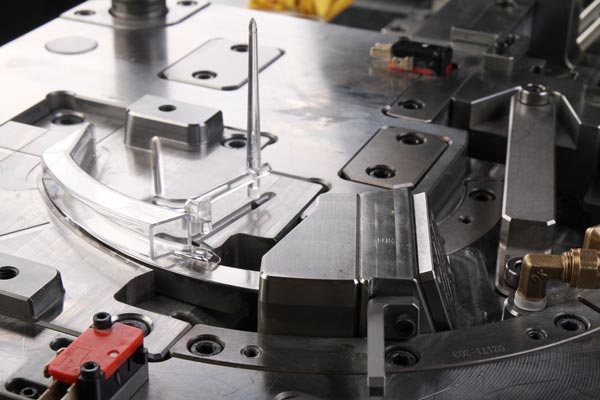
Solutions: Full-Process Optimization from Design to Maintenance
-
Material Selection and Surface Treatment
-
High-Wear-Resistant Materials: For plastics with high filler content, martensitic stainless steels (such as H13 and DIN 1.2344) are preferred, as their wear resistance is 2 - 3 times higher than that of ordinary mold steels. For transparent part molds, mirror-finish stainless steels (such as S136 and NAK80) are recommended, with a hardness of at least HRC50.
-
Surface Coating Technologies:
-
Nitriding Treatment: Conducting gas nitriding at 525 - 575°C can increase the surface hardness of the mold to HV1000 - 1200 and form a 0.3 - 0.5mm thick wear-resistant layer.
-
DLC Coating: Diamond-like carbon coatings have a hardness of HV2000 - 3000 and a low friction coefficient of 0.02 - 0.05. They are particularly suitable for transparent part molds and can reduce surface roughness to Ra ≤ 0.05μm and decrease wear by 80%.
-
Titanium Nitride (TiN) Coating: It has a golden color, a hardness of HV2000, and can withstand high temperatures up to 500°C. It is suitable for high-temperature injection molding scenarios (such as nylon materials).
-
Structural Design and Process Optimization
-
Runner System Improvement: Use large-radius circular arcs (R ≥ 2mm) instead of right-angle bends to reduce turbulent flow of the melt. Design the gates as tapered (such as fan gates or submarine gates) to avoid jetting of the melt against the cavity walls. For example, after a certain automotive grille mold changed its rectangular runner to a trapezoidal runner, the flow resistance of the melt decreased by 12%, and the wear of the runner increased by only 0.003mm after 50,000 mold cycles.
-
Venting System Refinement: Open venting slots with a depth of 0.02 - 0.03mm at the end of the cavity and use porous sintered metal venting blocks (such as Swedish Assab Corrax) in combination to avoid local corrosion and wear caused by trapped air. For deep-cavity part molds, a split-type structure can be adopted, and multi-hole sintered metal venting blocks can be set inside the core.
-
Segmented Injection Process: Use low-speed filling for the runner (0.1 - 0.3m/s) to reduce erosion and high-speed filling for the cavity (0.5 - 1.0m/s) to shorten the residence time. Simulate the pressure distribution through mold flow analysis (such as Moldflow) and control the peak pressure within 120 - 140MPa to avoid overload wear.
-
Temperature Management and Pressure Control
-
Melt Temperature Control: For materials prone to decomposition (such as PVC), use a multi-stage temperature-controlled barrel, with the front section temperature 10 - 15°C lower than the rear section to suppress decomposition. For mold temperature, use conformal cooling channel designs (such as 3D-printed cooling pipes) to ensure that the surface temperature uniformity error of the cavity is ≤ 2°C and reduce uneven wear caused by temperature differences.
-
Pressure Monitoring: Install strain-type pressure sensors at the gate to monitor the melt pressure fluctuations in real-time. Use laser thickness gauges to periodically scan key dimensions (such as cavity depth) with an accuracy of ±0.001mm to detect wear trends in advance.
-
Preventive Maintenance System
-
Periodic Polishing: For transparent part molds, perform mirror polishing on the cavity every 10,000 mold cycles (using 0.5μm diamond abrasive paste) to restore the surface roughness. For local repair and mold modification: For severely worn cores/cavities, use laser cladding technology (such as Stellite alloy powder) for repair and then perform precision milling with a five-axis machining center to ensure an accuracy of ±0.005mm.
-
Cleaning and Lubrication Management: After each shutdown, use a pure copper brush with a special mold cleaning agent (such as Houghton PD-95) to remove residual melt and avoid the retention of corrosive substances. Apply high-temperature lubricating grease (such as Klüber Topas NB 52) to moving parts such as guide posts and sliders to reduce friction and wear. It is recommended to replenish the lubricant every 2,000 mold cycles.
Case Study: Wear Resistance Upgrade of Optical Lens Molds
A company produces optical lenses for mobile phone cameras (made of PMMA, with a light transmittance requirement of ≥ 92%). The original mold was made of S136 steel without surface treatment. After 5,000 mold cycles, the surface roughness of the cavity increased from Ra0.05μm to Ra0.2μm, resulting in a decrease in the product's light transmittance to 88% and obvious fogging defects. The following improvement measures were taken:
-
Mold Surface Treatment: Conduct ion nitriding (penetration depth of 0.4mm, hardness of HV1100) + DLC coating (thickness of 2μm, Ra0.02μm).
-
Runner Optimization: Change the circular runner to a parabolic runner and use a 0.8mm diameter pin gate with a flow guide cone.
-
Process Parameter Adjustment: Reduce the injection speed from 0.8m/s to 0.5m/s and increase the mold temperature from 60°C to 80°C to improve the flowability of the melt.
Effect: After 30,000 mold cycles, the surface roughness of the cavity only increased to Ra0.08μm, and the product's light transmittance remained stable at 91% or above. The precision loss caused by wear decreased by 90%.
Conclusion
The mold wear problem in medical injection molding requires a full-process control system covering materials, design, process, and maintenance. By using high-performance materials and surface treatments to enhance the intrinsic wear resistance of the mold, optimizing the structural design and process parameters to reduce wear incentives, and relying on precise monitoring and advanced repair technologies for early intervention and precise restoration of wear, the dimensional deviation of products caused by mold wear can be controlled within ±0.005mm. This significantly improves production efficiency and product quality stability, providing reliable guarantees for the mass production of high-precision medical consumables.






 Home
Home