Analysis and Solutions for Poor Glossiness in Medical Injection-Molded Parts
In the production of medical injection-molded parts, glossiness is a critical indicator of surface quality. Poor glossiness not only affects product aesthetics but may also indirectly reflect issues with material performance or process control. In high-end medical device manufacturing, surface quality requirements are particularly stringent. This article systematically analyzes the causes of poor glossiness from four perspectives—material selection, mold design, injection molding process, and post-processing—and proposes targeted solutions.
1. Causes of Poor Glossiness
-
Material Factors: Impurities in low-purity or inferior resins can lead to uneven melt flow, resulting in a rough microscopic surface. Excessive use of mold release agents, lubricants, or color masterbatches may disrupt surface tension, creating a hazy or matte finish. Material degradation due to excessive processing temperatures or dwell times can introduce bubbles or carbonization, reducing surface gloss.
-
Mold Factors: A rough mold cavity surface (high Ra value) directly replicates onto the product, creating a matte texture. Inadequate mold temperature control can cause rapid melt cooling, preventing proper molecular alignment and uneven surface shrinkage. Poor venting design may trap air during mold filling, leading to gas marks or burn marks.
-
Process Parameters: Low injection speed or pressure can result in incomplete filling, causing flow lines or sink marks. Insufficient packing pressure or time may lead to shrinkage voids or vacuum bubbles, disrupting surface smoothness. Incorrect melt temperatures (too high or low) can affect material flowability, leading to surface defects.
-
Post-Processing & Environment: Residual mold release agents may form an oily film, reducing gloss. Improper storage conditions (high temperature or humidity) can cause material hydrolysis, introducing silver streaks or bubbles during processing.
2. Systematic Solutions
-
Material Optimization:
-
Use high-purity medical-grade resins (e.g., PP, PC, ABS) compliant with ISO 10993 biocompatibility standards.
-
Strictly control additive ratios (e.g., mold release agents ≤0.5%).
-
Pre-dry hygroscopic materials (e.g., PA, PBT) at 80–100°C for 4–6 hours to reduce moisture content to ≤0.02%.
-
Mold Design & Maintenance:
-
Polish mold cavity surfaces to Ra ≤0.05 μm; apply chrome plating or nitriding for enhanced wear resistance.
-
Optimize gating systems with balanced runners to minimize melt flow resistance; use pin or submarine gates to reduce weld lines.
-
Implement dynamic mold temperature control (oil or water heaters) to maintain temperatures 20–30°C below the material’s melting point.
-
Process Parameter Adjustment:
-
Multi-stage injection control:
-
High-speed filling (80–90% stroke) to prevent premature cooling.
-
Low-speed packing to reduce internal stress and surface depression.
-
Temperature gradient management:
-
Melt temperature: Set within the material’s recommended range (e.g., 280–320°C for PC).
-
Mold temperature: Adjust based on material properties (e.g., 60–80°C for PP, 80–100°C for PC).
-
Packing pressure optimization: Use stepped packing (pressure decreasing from 80% to 30%) for 3–5 seconds to ensure full material compensation.
-
Post-Processing & Quality Control:
-
Ultrasonic cleaning with neutral detergents to remove mold release agent residues.
-
Medical-grade UV-curable coating application (10–20 μm thickness) for high-gloss requirements.
-
Online inspection systems with machine vision to monitor glossiness (standard value ≥80 GU) and automatically reject defective parts.
3. Case Study: Glossiness Improvement for Infusion Set Components
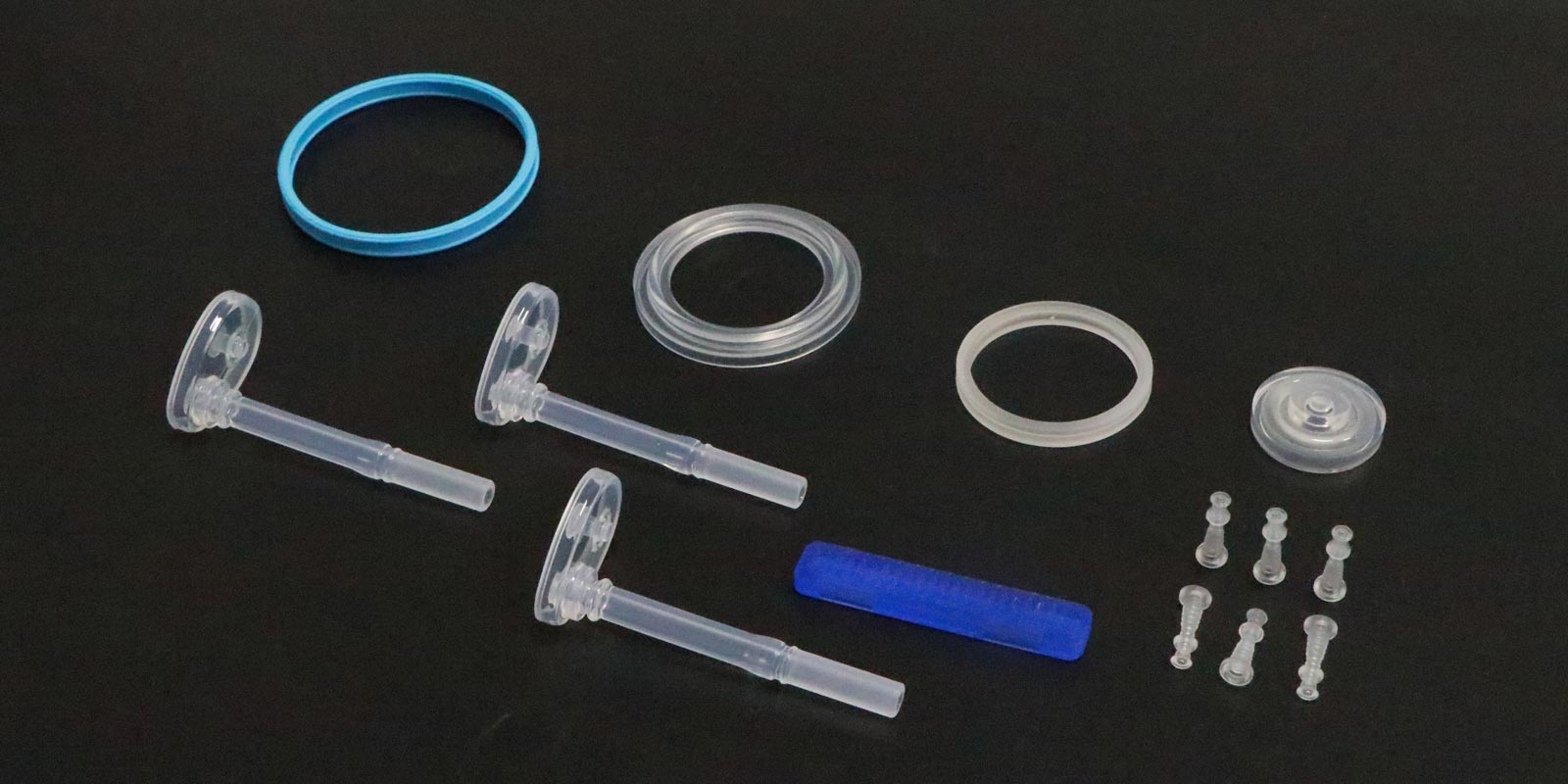
A manufacturer producing flow regulators for infusion sets encountered hazy surface defects. The following improvements were implemented:
-
Switched to medical-grade PC (Bayer Makrolon 2458) with moisture content controlled at 0.015%.
-
Polished mold cavity surfaces to Ra 0.03 μm and added conformal cooling channels.
-
Adjusted process parameters: melt temperature 300°C, mold temperature 90°C, injection speed 80 mm/s, packing pressure 60 MPa.
-
Introduced plasma surface treatment to enhance adhesion.
Result: Glossiness improved from 65 GU to 92 GU, with defect rates dropping from 12% to 0.5%.
4. Future Trends
As medical industries demand higher product precision, intelligent injection molding technologies will become pivotal:
-
AI-driven process optimization: Machine learning models to predict glossiness based on process parameters for adaptive control.
-
Nano-mold coatings: Diamond-like carbon (DLC) coatings to extend mold life by 3–5x while reducing friction.
-
Closed-loop control systems: Integrated pressure sensors and infrared thermometers for real-time melt monitoring and process stability.
Conclusion
Addressing poor glossiness in medical injection-molded parts requires a holistic approach across materials, molds, processes, and post-processing. By scientifically analyzing defect roots and leveraging advanced technologies with rigorous quality control, manufacturers can significantly enhance surface quality to meet medical industry standards for safety and aesthetics. Continuous R&D investment will drive injection molding toward precision and intelligence.






 Home
Home