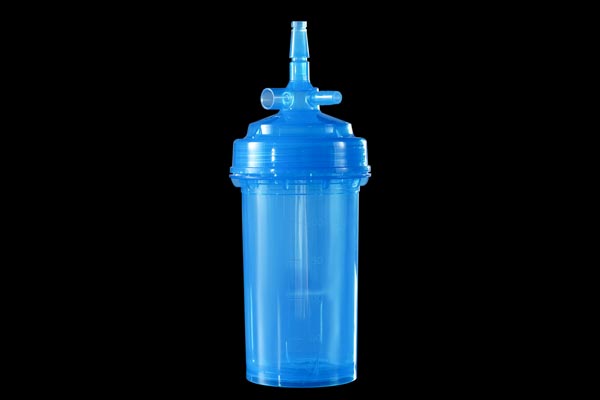
In the production process of medical injection-molded products, the issue of internal stress is a common and thorny challenge. Internal stress not only affects the mechanical properties of products, such as strength and toughness, but may also lead to problems like deformation and cracking during use, seriously impacting the safety and reliability of the products. This article will delve into the causes of internal stress in medical injection-molded products and introduce a series of effective methods for eliminating it.
Causes of Internal Stress
1. Injection Molding Process Factors
-
Injection Pressure and Holding Pressure: Excessively high injection and holding pressures subject the melt in the mold cavity to significant shear forces, intensifying molecular chain orientation. When the melt cools and solidifies, these oriented molecular chains are frozen, resulting in orientation stress. For example, when injecting high-precision medical catheters, if the injection pressure is too high, significant orientation stress may remain inside the catheter, affecting its flexibility and service life.
-
Injection Speed: A too-fast injection speed can cause unstable flow of the melt in the mold cavity, generating turbulence and increasing the degree of molecular chain orientation. Meanwhile, rapid cooling may lead to uneven shrinkage between the inner and outer layers of the product, creating cooling stress. Conversely, a too-slow injection speed may cause the melt to stratify in the mold cavity, forming weld lines and creating stress concentrations.
-
Mold Temperature: A low mold temperature causes the melt to cool too quickly, increasing the difference in shrinkage between the inner and outer layers and thus raising cooling stress. Additionally, uneven mold temperatures can result in different cooling rates across various parts of the product, generating internal stress. For instance, when producing medical plastic casings, if the mold temperature is higher on one side and lower on the other, the casing may bend and deform.
-
Holding Time: A long holding time keeps the melt under continuous pressure in the mold cavity, further orienting the molecular chains and increasing orientation stress. Moreover, an excessively long holding time may also create excessive internal pressure within the product, forming volume strain stress.
2. Raw Material Factors
-
Molecular Structure: Plastics with more rigid molecular chains and stronger polarity have greater intermolecular forces and poorer molecular chain mobility. They are less able to recover from reversible elastic deformation, resulting in higher residual internal stress. For example, polycarbonate (PC) has a rigid molecular chain with a benzene ring, so its products tend to have relatively high internal stress.
-
Molecular Weight Distribution: A wider molecular weight distribution means more low-molecular-weight components. These low-molecular-weight components are prone to forming microscopic tears first, causing stress concentrations and making the product more likely to crack.
-
Impurity Content: Impurities in the raw material can act as stress concentrators, reducing the original strength of the plastic and increasing the risk of internal stress generation.
3. Product Design Factors
-
Shape and Wall Thickness: Complex product shapes and uneven wall thicknesses can lead to uneven flow and cooling of the melt in the mold cavity, generating internal stress. For example, products with sharp corners, notches, or sudden expansions or contractions are prone to stress concentrations at these locations.
-
Insert Design: If a product contains metal inserts, due to the significant difference in the thermal expansion coefficients between metal and plastic, inconsistent shrinkage during cooling can generate internal stress.
Methods for Eliminating Internal Stress
1. Optimize Injection Molding Process
-
Adjust Injection Parameters: Appropriately reduce the injection and holding pressures and select suitable injection speeds and holding times. For example, for medical injection-molded products prone to internal stress, a multi-stage injection and holding process can be adopted, using different pressures and speeds at different stages to reduce molecular chain orientation and internal pressure generation.
-
Control Mold Temperature: Increasing the mold temperature can reduce the cooling rate of the melt, allowing sufficient time for the molecular chains to relax and reducing orientation and cooling stresses. At the same time, ensure uniform mold temperature, which can be precisely controlled using a mold temperature control system.
-
Optimize Melt Temperature: Appropriately increasing the melt temperature can reduce the viscosity of the melt, decreasing the shear force during mold filling and reducing orientation stress. However, the melt temperature should not be too high to avoid plastic degradation and insufficient cooling.
2. Raw Material Modification
-
Select Appropriate Raw Materials: Based on the product's performance requirements, choose raw materials with moderate molecular weight, a narrow molecular weight distribution, and low impurity content. For medical products with high internal stress requirements, specially modified plastics, such as those with added toughening agents or nucleating agents, can be selected.
-
Blending Modification: Blending a resin prone to stress cracking with a suitable other resin can reduce the degree of internal stress. For example, blending an appropriate amount of polystyrene (PS) or polyethylene (PE) into PC. PS is dispersed in the PC continuous phase in a nearly spherical form, allowing stress to be dispersed and relieved along the sphere and preventing crack propagation. The spherical outer layer of PE can form a closed cavitation zone, appropriately reducing stress.
-
Fiber Reinforcement Modification: Reinforcing modification with fibers can reduce the internal stress of the product. Fibers entangle many macromolecular chains, improving the product's resistance to stress cracking. For example, 30% glass fiber-reinforced PC (GFPC) has a stress cracking resistance six times higher than that of pure PC.
3. Optimize Product Design
-
Simplify Product Shape: Avoid sharp corners, notches, etc. in the product as much as possible, and use rounded corners for transitions. The radius of the rounded corners should be greater than 70% of the thickness of the thinner adjacent wall. For parts with significant differences in wall thickness, a gradual transition should be made to make the product's wall thickness as uniform as possible.
-
Rational Design of Inserts: If metal inserts must be included in the product, consider the difference in the thermal expansion coefficients between metal and plastic and take corresponding measures, such as coating the insert surface to increase its adhesion to the plastic and reduce internal stress caused by inconsistent shrinkage.
4. Post-Processing Techniques
-
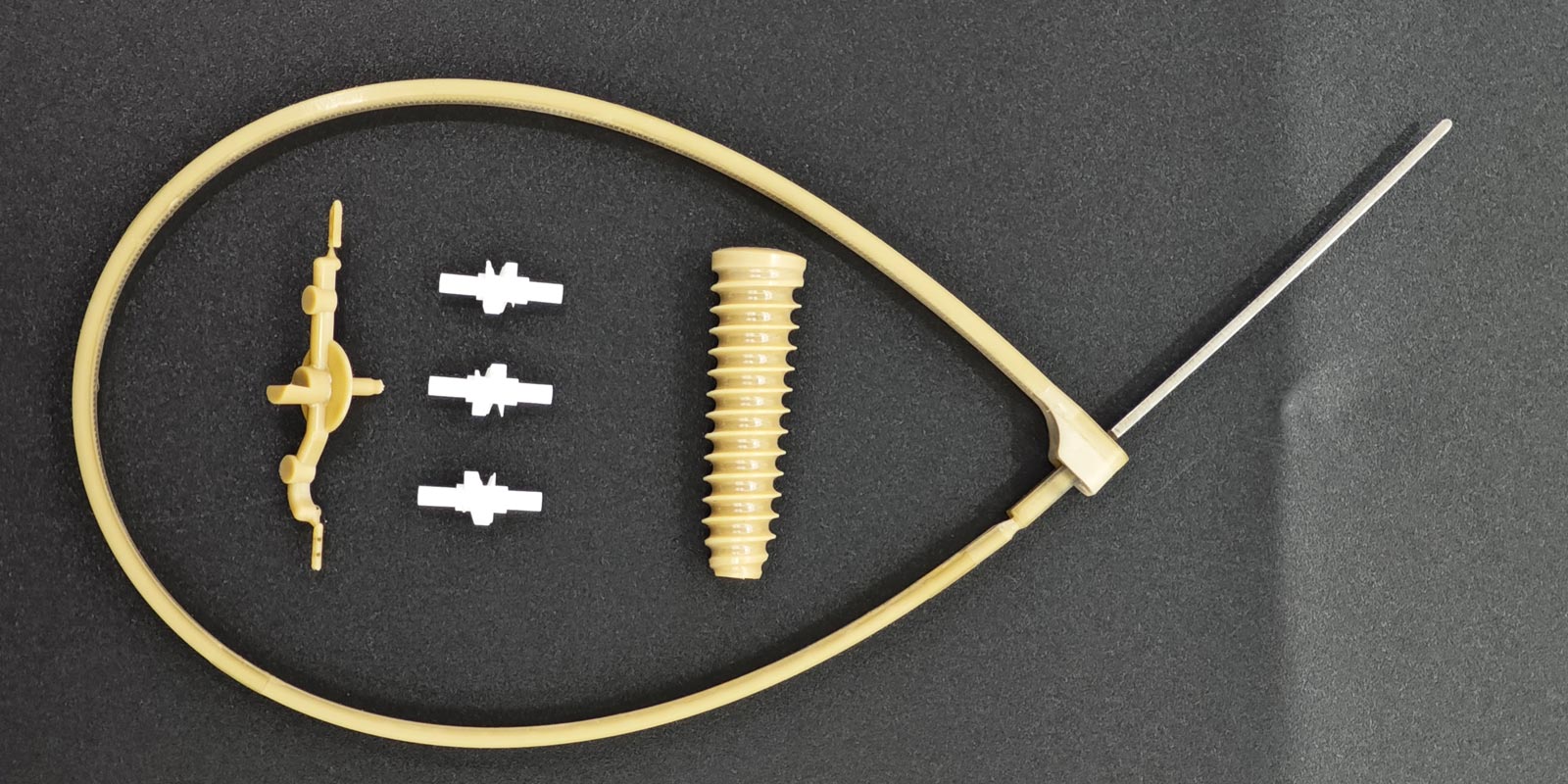
Annealing Treatment: Annealing is one of the best ways to eliminate internal stress. Heat the injection-molded product to a certain temperature (usually 5 - 10°C lower than the heat distortion temperature) and hold it for a period of time, then slowly cool it to room temperature. During annealing, the polymer molecules transform from an unbalanced conformation to a balanced conformation, and the forced frozen unstable high-elastic deformation gains energy for thermal relaxation, thereby reducing or basically eliminating internal stress. For example, for PEEK medical products, the product can be heated to a temperature slightly above its glass transition temperature (about 143°C), usually in the range of 150 - 260°C. The heating rate should be controlled at 8 - 30°C/h, and the holding time should be determined according to the product's wall thickness, generally 0.5 - 2 hours per millimeter of wall thickness. Then, slowly cool it to room temperature at a rate of 2 - 12°C/h.
-
Hot Water Immersion Treatment: For some thin-walled medical injection-molded products, hot water immersion can be used to eliminate internal stress. Immerse the product in hot water to ensure uniform internal heating and molecular chain relaxation, reducing internal stress. The immersion time and water temperature should be adjusted according to the product's material and size.
Conclusion
The issue of internal stress in medical injection-molded products is complex, involving multiple aspects such as the injection molding process, raw materials, and product design. By optimizing the injection molding process, modifying raw materials, optimizing product design, and using post-processing techniques like annealing, internal stress in medical injection-molded products can be effectively reduced and eliminated, improving product quality and reliability and ensuring their safe use in the medical field. In actual production, multiple methods should be comprehensively used according to the specific situation of the product to achieve the best internal stress elimination effect.





 Home
Home