In the field of medical injection molding, the precision and quality of products are directly related to the health and safety of patients. Injection molding, as a widely applied manufacturing process, can efficiently produce various medical components with complex shapes and precise dimensions. However, the burr problem often becomes a major headache affecting the quality of medical injection-molded products. Burrs not only reduce the appearance quality of products but may also have a negative impact on their functionality and even pose potential hazards to patients during medical use. Therefore, it is of great importance to delve into the causes of burr formation in medical injection-molded products and find effective solutions.
Analysis of the Causes of Burr Formation
-
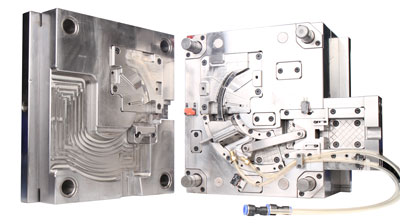
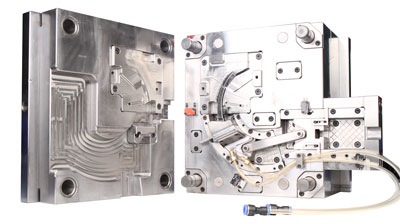
Mold Factors: The mold is the core component of injection molding, and its design and manufacturing quality play a decisive role in product quality. Wear on the mold parting surface, unreasonable design, or insufficient machining accuracy can all cause the plastic melt to overflow during the injection process, resulting in burrs. For example, if there are gaps in the parting surface, the melt will seep in and form excess flash at the edges of the product. Improper design of the mold's venting system can prevent the gas inside the mold from being discharged smoothly during injection, creating high pressure in local areas and forcing the melt to extrude through the mold gaps, forming burrs. In addition, if the mold lacks sufficient rigidity, it may undergo elastic deformation under high-pressure injection, also leading to burr problems.
-
Injection Molding Process Parameters: The setting of injection molding process parameters directly affects the flow and filling process of the plastic melt. Excessively high injection pressure can force the melt into the tiny gaps of the mold, causing burrs. Too fast injection speed can make the melt flow unstable inside the mold, easily generating vortices and turbulence and increasing the likelihood of burr formation. Excessive holding pressure or a long holding time can cause the melt that has already filled the mold cavity to be continuously squeezed and overflow, forming burrs. At the same time, an overly high melt temperature enhances the fluidity of the plastic, making it more prone to burr formation. An inappropriate mold temperature can affect the cooling and solidification process of the melt, thereby impacting product quality and potentially causing burrs.
-
Raw Material Factors: The performance of raw materials has an important impact on the quality of injection-molded products. If the fluidity of the raw material is too good, it is more likely to flow into the tiny gaps of the mold during injection and form burrs. If the raw material contains impurities or moisture, gases will be generated during the heating and melting process. The accumulation of these gases inside the mold can lead to uneven melt flow and increase the possibility of burr formation. In addition, uneven particle size of the raw material can also affect the filling performance of the melt and thus impact product quality.
-
Equipment Factors: The performance and condition of the injection molding machine can also affect product quality. If the injection unit of the injection molding machine has insufficient precision and cannot accurately control the injection pressure and injection speed, it can easily lead to burr problems. If the clamping unit has insufficient clamping force, the mold cannot be tightly closed during injection, allowing the melt to overflow and form burrs. Failures in the hydraulic or electrical control system of the equipment can also affect the stability and accuracy of the injection molding process parameters, thereby causing burr problems.
Effective Strategies to Solve the Burr Problem
-
Optimize Mold Design and Manufacturing: For burr problems caused by mold factors, a comprehensive inspection and evaluation of the mold should be carried out first. For molds with worn parting surfaces, they should be repaired or replaced in a timely manner to ensure the flatness and sealing of the parting surface. Optimize the mold design by reasonably designing the parting surface and venting system to reduce the possibility of melt overflow. For example, adopting a mosaic-type mold structure facilitates mold processing and maintenance while improving mold precision. Optimize the design of venting slots to ensure that the gas inside the mold can be discharged smoothly. During mold manufacturing, strictly control the machining accuracy and use high-precision machining equipment and processes to ensure that the mold's dimensional accuracy and surface quality meet the requirements. In addition, improve the rigidity of the mold by using high-strength mold materials and reasonable structural designs to reduce elastic deformation under high-pressure injection.
-
Precisely Adjust Injection Molding Process Parameters: According to the specific requirements of the product and the performance of the raw material, precisely adjusting the injection molding process parameters is the key to solving the burr problem. Through experiments and optimization, determine appropriate injection pressure, injection speed, holding pressure, and holding time parameters. Generally, on the premise of ensuring that the product can fully fill the mold cavity, try to reduce the injection pressure and holding pressure to avoid melt overflow. Reasonably control the injection speed to make the melt flow smoothly inside the mold and reduce the generation of vortices and turbulence. Adjust the melt temperature and mold temperature according to the performance of the raw material and the size of the product to ensure uniform cooling and solidification of the melt. At the same time, multi-stage injection and holding pressure processes can be adopted to set different injection pressures and holding pressures for different parts and filling stages of the product to further improve product quality.
-
Strictly Control Raw Material Quality: Selecting raw materials with stable quality and suitable performance is the foundation for solving the burr problem. When purchasing raw materials, choose reputable suppliers to ensure that the quality of the raw materials meets relevant standards and requirements. Conduct strict inspection and testing on the raw materials, checking indicators such as fluidity, impurity content, and moisture content to ensure stable and reliable raw material quality. In addition, pre-treat the raw materials, such as drying treatment, to remove moisture from the raw materials and reduce gas generation during the injection molding process.
-
Strengthen Equipment Maintenance and Management: Regularly maintain and service the injection molding machine to ensure its good performance and condition. Check the precision of the injection unit and the clamping unit, and promptly adjust and repair faulty and worn parts of the equipment to ensure accurate control of parameters such as injection pressure, injection speed, and clamping force. At the same time, establish a complete equipment management system, strengthen the training and management of equipment operators, improve their skill levels and sense of responsibility, and ensure the normal operation of the equipment.
Conclusion
The burr problem in medical injection-molded products is a complex issue involving multiple aspects such as molds, processes, raw materials, and equipment. To solve this problem, a comprehensive approach is required. By optimizing mold design and manufacturing, precisely adjusting injection molding process parameters, strictly controlling raw material quality, and strengthening equipment maintenance and management, the formation of burrs in medical injection-molded products can be effectively reduced, improving product quality and reliability and providing strong support for the development of the medical industry. At the same time, with the continuous progress of science and technology and the continuous innovation of injection molding technology, we should also continuously explore new solutions and processes to further improve the quality and production efficiency of medical injection-molded products.






 Home
Home